 Best odds
A summer night
Clearest season
- Cloudless days
- Up to 27.0
- Night length
- Shortest
- Highlight
- Milky Way
Guides
Language
EnglishCurrency
US dollar · $Your currency applies on GetYourGuide too.
Guide · Best time
What time is the best for stargazing depends on three clocks: the season, the Moon and the hour of the night. Here is how each one works on Teide, with the mountain's own records.
Editorial team, tenerifestargazingtour.comUpdated October 23, 20266-minute read19 sources
Quick answer
Ask what time is the best for stargazing and you get three answers at once. The season decides how often the sky is clear and how long the night lasts. The Moon decides how dark that night is. And the hour decides what is above the horizon and whether your eyes are ready to see it.
The good news first. Turismo de Tenerife says that, thanks to the climate, the transparency of the sky and the hours of useful observation, the stars can be observed well practically all year round.1 There is no closed season for the sky over Teide, only better and worse odds.
The odds come from the records of AEMET, Spain's weather agency, at its Izaña station, 2,369 m up beside the Teide Observatory.6 Its 1981 to 2010 normals count the cloudless days of every month, which is the closest public measure of how often the sky above the park is clear.72 Read them as a guide to your chances, not a promise: a cloudless afternoon can still be followed by a misty night, and a gray day can clear completely after sunset as the air cools.
One lunar month
New Moon
The Moon is up during the day with the Sun.8
First quarter
It sets around the middle of the night.9
Full Moon
It rises at sunset and sets at sunrise.4
Third quarter
It rises around the middle of the night.10
Next new Moon
The cycle repeats about every 29.5 days.11
Summer is the clear season on the mountain. Izaña averages 23.8 cloudless days in June, 27.0 in July and 24.2 in August.2 Spring builds towards it, with 13.6 in April and 16.4 in May, and September still manages 16.5.212
Late autumn and winter are cloudier. October averages 11.7 cloudless days, November 9.4 and December 10.8.12 February and March come in at 12.7 and 13.4, and AEMET gives no cloudless-day figure for January.13 Rain at Izaña adds up to 392 mm in an average year, most of it outside summer.14
These are daytime counts from a weather station, not a forecast of your particular night, but they show the pattern clearly. If your dates are flexible, a summer week gives you the best chance of several clear evenings in a row. If they are fixed, book early in your stay so a cloudy night still leaves time to try again.
Month by month
Seasons compared
| Season | Cloudless days | In the sky | Cold |
|---|---|---|---|
| Summer | 23.8 to 27.0 a month | Milky Way, Summer Triangle | July low 14 °C |
| Autumn | 9.4 to 16.5 a month | Long, cooler evenings | November low 4.5 °C |
| Winter | 10.8 to 12.7 a month | Geminids in December | January low 1.1 °C |
| Spring | 13.4 to 16.4 a month | Lengthening dark hours | April low 3.5 °C |
Cloudless days and lows are AEMET's 1981 to 2010 normals for Izaña at 2,369 m; January has no cloudless-day figure.1321231516
Three kinds of night
Best oddsClearest season
 Dress warm
Longest darkness
 Moon views
Decision helper
Match your dates to what you want to see
Izaña averages 27.0 cloudless days in July.2
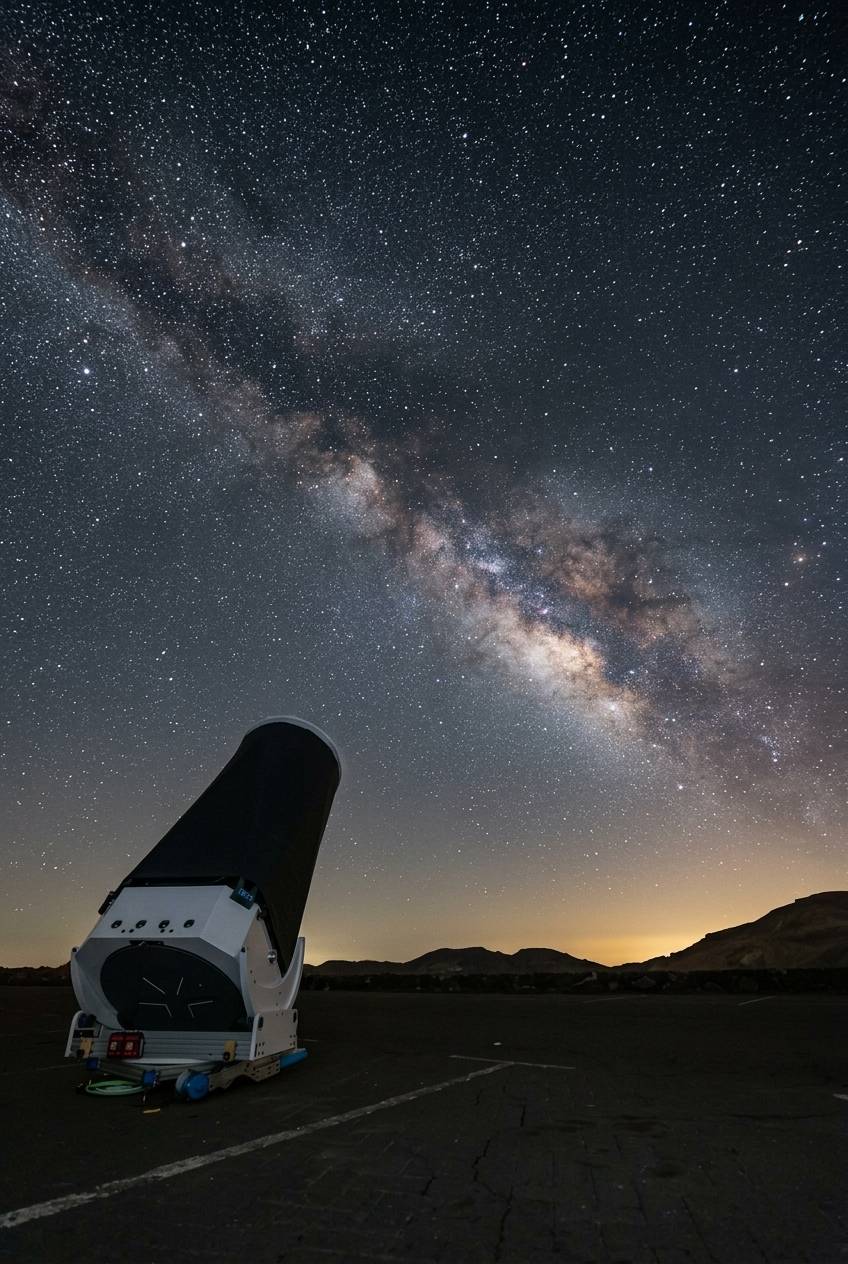
Summer shows the Milky Way at its fullest.15
The Perseids and the Geminids are the best-known showers.16
Free cancellation up to 24 hours before keeps it movable.
It rises at sunset and stays up all night.4
These factors mean that the stars can be observed optimally practically all year round.
The trade-off is darkness. By our own calculation the sun is above the horizon at Izaña for about 13.9 hours in mid-June and about 10.4 hours in mid-December.3 A winter night is several hours longer, and the sky is fully dark much earlier in the evening.
That matters for tours that start at sunset. A December evening reaches real darkness early, so the guided session fits comfortably before midnight. In June the sunset is late, and the full dark sky arrives late too, which pushes the end of the evening deep into the night.
Winter also brings cold. The average low at Izaña is 1.1 °C in January, and AEMET counts 12.3 frost days that month.313 The IAC suspends its own visits to the Teide Observatory from December to March because of adverse weather, a reminder that winter on the high mountain is real winter.17
Checklist
Video
No video data loads before you press play.
The Moon goes through its whole cycle of phases about every 29.5 days.11 Around full Moon it rises at sunset and sets at sunrise, so it lights the sky all night and drowns the faint stars and the Milky Way.4 It is a wonderful sight in a telescope, but not the night for deep-sky viewing.
The phases either side of full Moon split the night. A first quarter Moon rises around midday and sets around the middle of the night, so the evening is bright and the hours after it darker.9 A third quarter Moon rises around the middle of the night, which leaves the evening, when tours run, dark.10
Around new Moon the Moon is up during the day with the Sun, so the whole night is dark.8 Turismo de Tenerife's advice is simply to avoid the Moon, especially when it is full.18 One telescope operator also asks guests to keep the Moon's phase in mind when booking. Check a phase calendar for your dates before you choose a night.
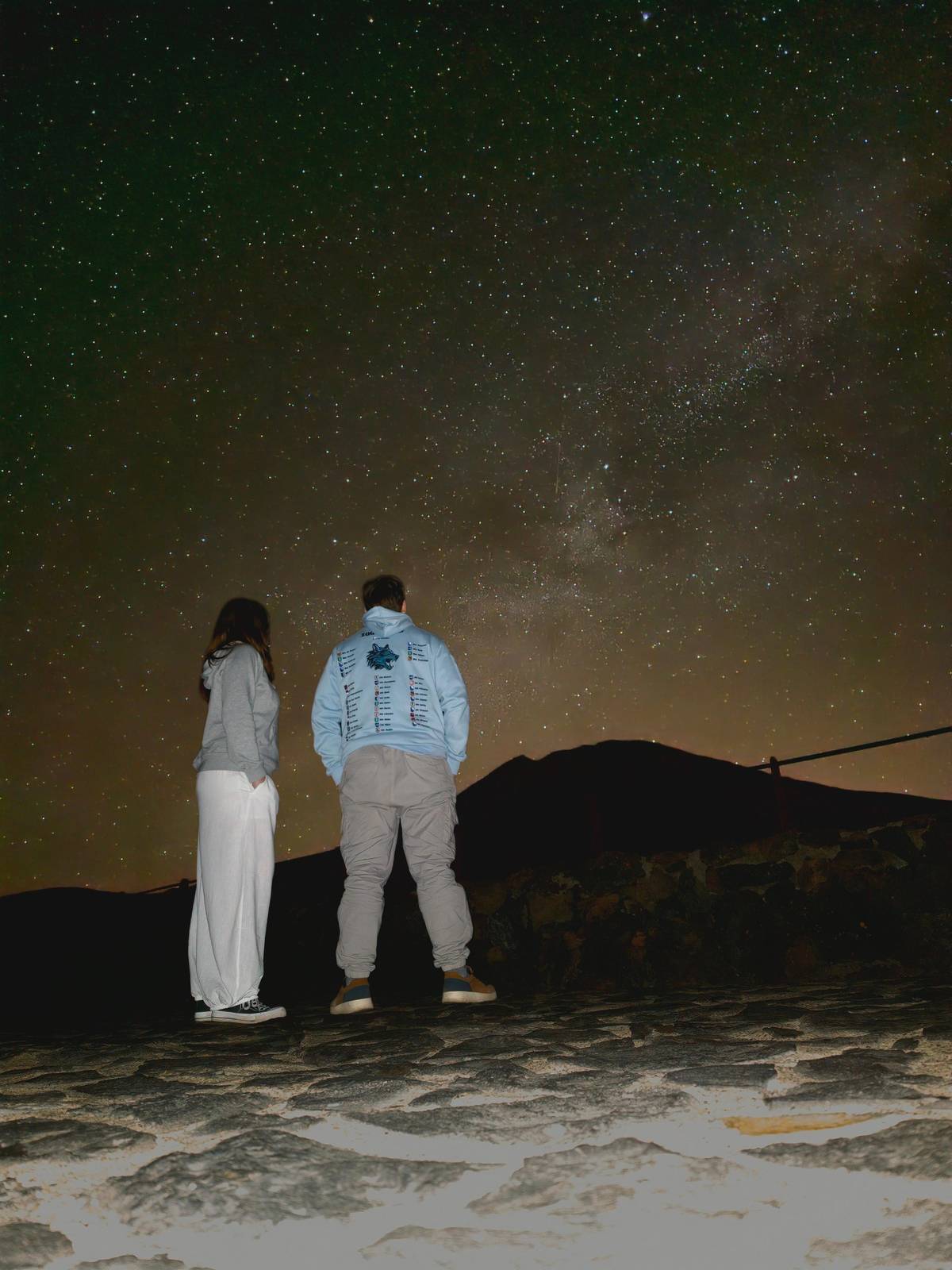
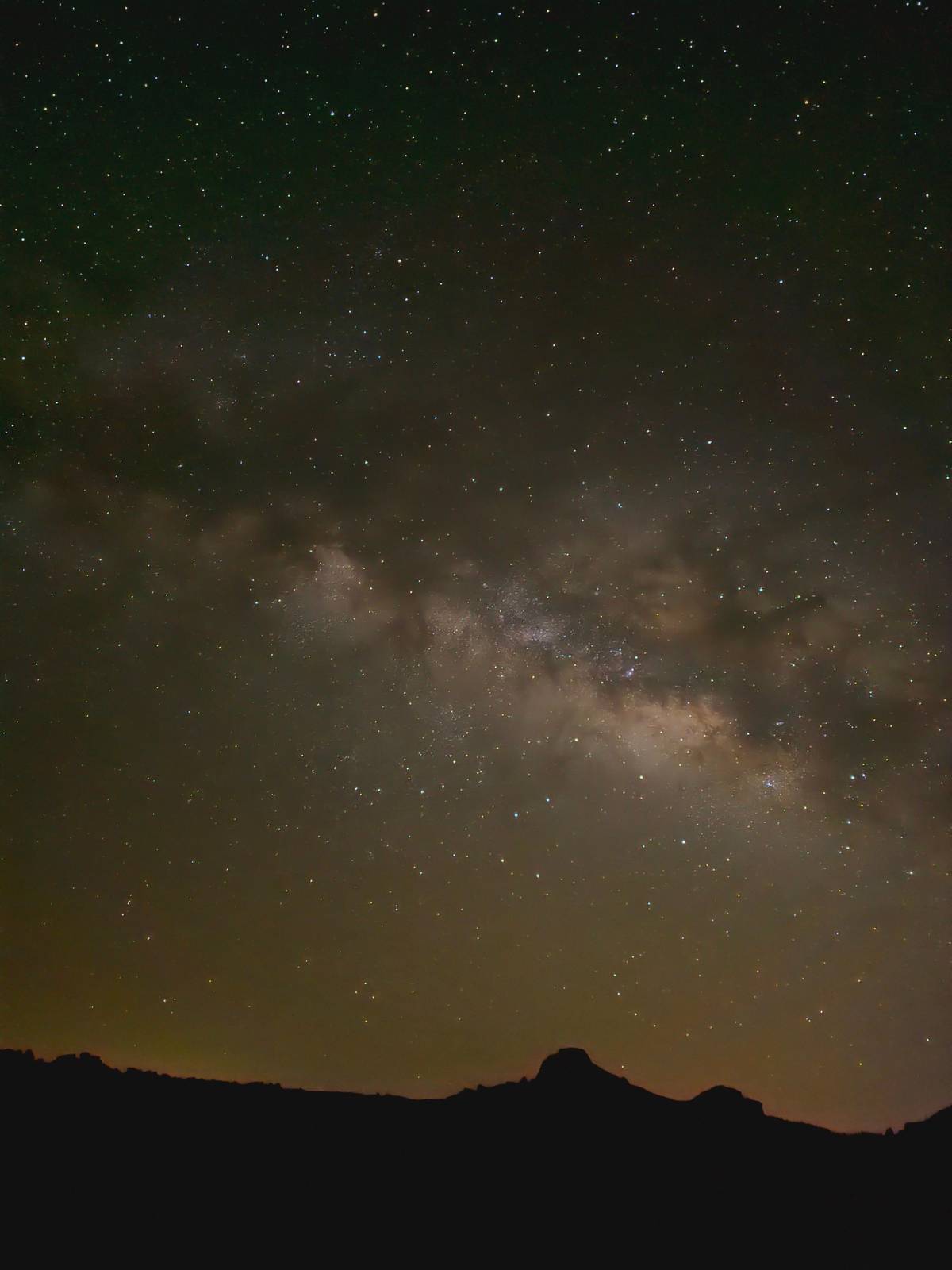
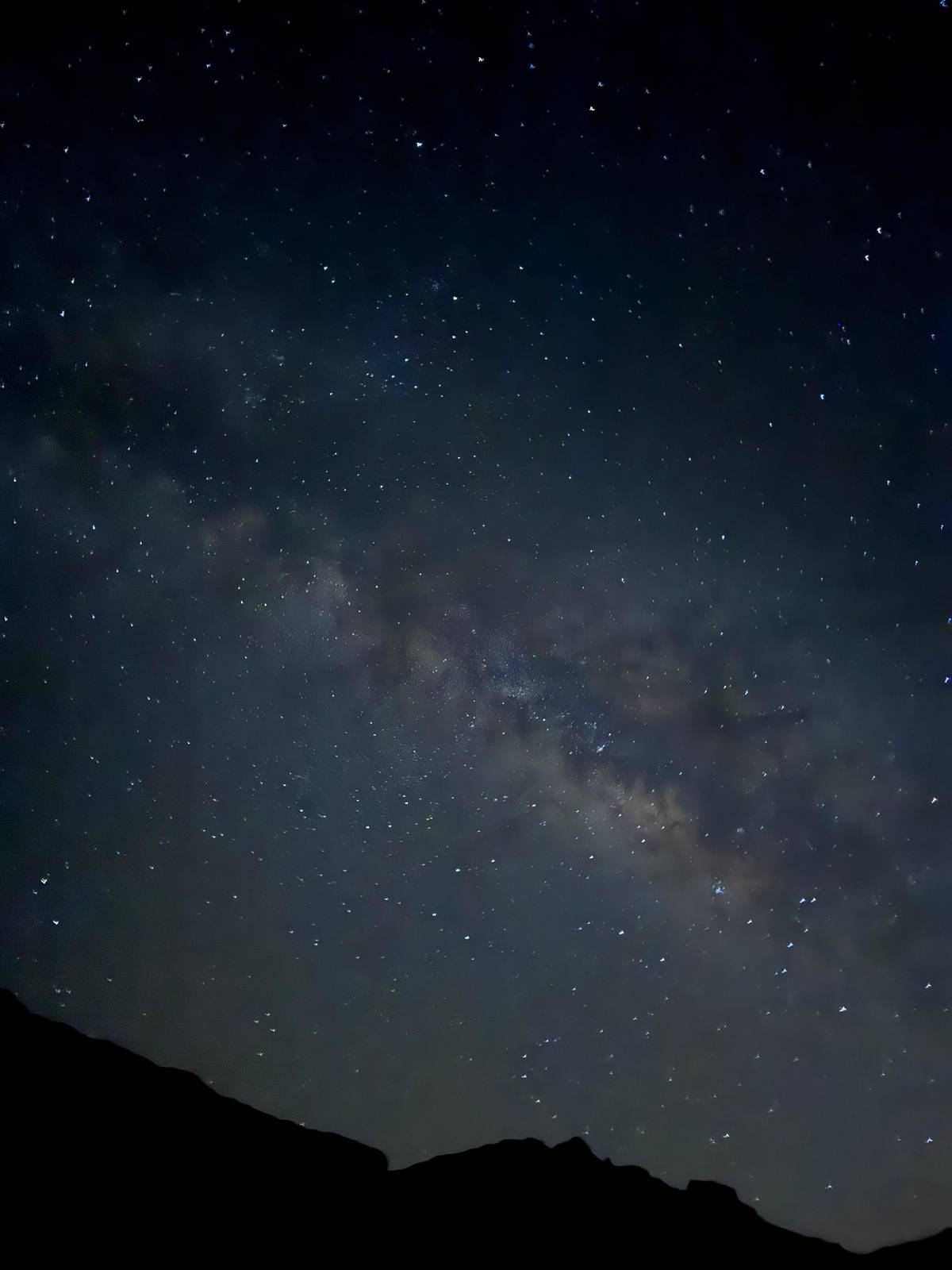
The Teide night sky changes through the year. In summer the Milky Way is at its fullest, and the Summer Triangle of Vega, Altair and Deneb stands high overhead.15 Summer is also when most nights are clear, so it is the season for Milky Way photographs.2
Meteor showers add their own dates. The Perseids in August and the Geminids in December are the best-known showers seen from Tenerife.16 A shooting star is never guaranteed, but on those nights the odds of seeing several in an evening are far better than usual.
Winter skies are just as rich, with different constellations and the longest dark hours of the year. The telescope views do not depend on the season as much as the naked-eye sky does: planets, clusters and galaxies appear in different months, and a good guide shows whatever is best placed on your night. That is one of the quiet advantages of a guided evening: you do not need to know in advance what will be up, because the person with the laser pointer does, and the telescope is aimed at the best target of the hour rather than at a list you prepared at home.
Most guided sessions follow the sunset rather than the clock. The session near the Ermita de las Nieves begins 40 minutes after sunset, and the large-telescope session sets its start by the sunset too, so it moves with the seasons.
The evening booked on this site watches the sunset first and then spends 2.25 hours stargazing at a second viewpoint. Its exact pickup or meeting time is sent by WhatsApp on the day, so you do not need to work out sunset times yourself.
On your own, give yourself time to adapt. The human eye needs 15 to 30 minutes to adjust to darkness, and a bright light resets it for another 15 minutes.5 Arrive before the sky is fully dark, set up, then let the stars come to you instead of hunting for them with a torch. The sky also turns as the night goes on, so stars that rise in the east after dinner stand high by midnight. If you are on your own and the evening is clear, staying an extra hour often shows you a different sky from the one you arrived under.
The park's climate is dry, with strong contrasts between day and night and often strong winds.19 Clouds and wind can change within hours, so the most useful thing you can do is keep a spare evening. Book for one of the first nights of your trip rather than the last, then move it if the sky looks poor.
Free cancellation helps. On the evening booked here, cancelling costs nothing until 24 hours ahead, and paying can wait. If wind, cloud or cold make its upper viewpoint unsuitable on the night, the guides keep the group at the lower one rather than cancel the evening.
Avoid booking the night you arrive. The operator recommends against the same night if your plane lands in the afternoon, because the time arrives by WhatsApp and pickup follows the sunset. A rested first full day, with the stargazing that evening, is the calmer plan. It also leaves you the rest of the week as a buffer if the first night turns cloudy, which on a mountain is always a possibility, whatever the month.
Your night on Teide
Hotel pickup in the south or your own car; choose an evening, and change your mind free until 24 hours ahead.
July, on clear nights. Izaña averages 27.0 cloudless days in July, the highest of the year.2
Yes, with warm clothes. Winter nights are longest, but Izaña's January low averages 1.1 °C.3
For faint stars, yes. A full Moon rises at sunset and sets at sunrise, lighting the whole night.4
About every 29.5 days. NASA gives the cycle of phases as repeating about once a month, every 29.5 days.11
In summer. The tourism board says summer shows the Milky Way at its fullest, with the Summer Triangle.15
August and December. The Perseids come in August and the Geminids in December, the best-known showers seen from Tenerife.16
Around sunset. Start times follow the sunset; one session near the Ermita begins 40 minutes after it.
Sources