 Booked here
Observatory night tour
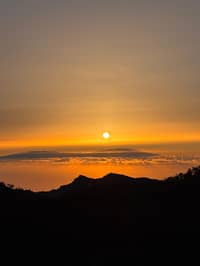
Afternoon visit, then stars
- Length
- 8 hrs
- Pickup
- Included
- Price
- from $126
Guides
Language
EnglishCurrency
US dollar · $Your currency applies on GetYourGuide too.
Guide · Observatory
A Tenerife observatory night tour pairs an afternoon among the domes of Izaña with a night at the eyepiece. Here is what the observatory does, how to visit, and which telescopes the public can use.
Editorial team, tenerifestargazingtour.comUpdated October 23, 20266-minute read27 sources
Quick answer
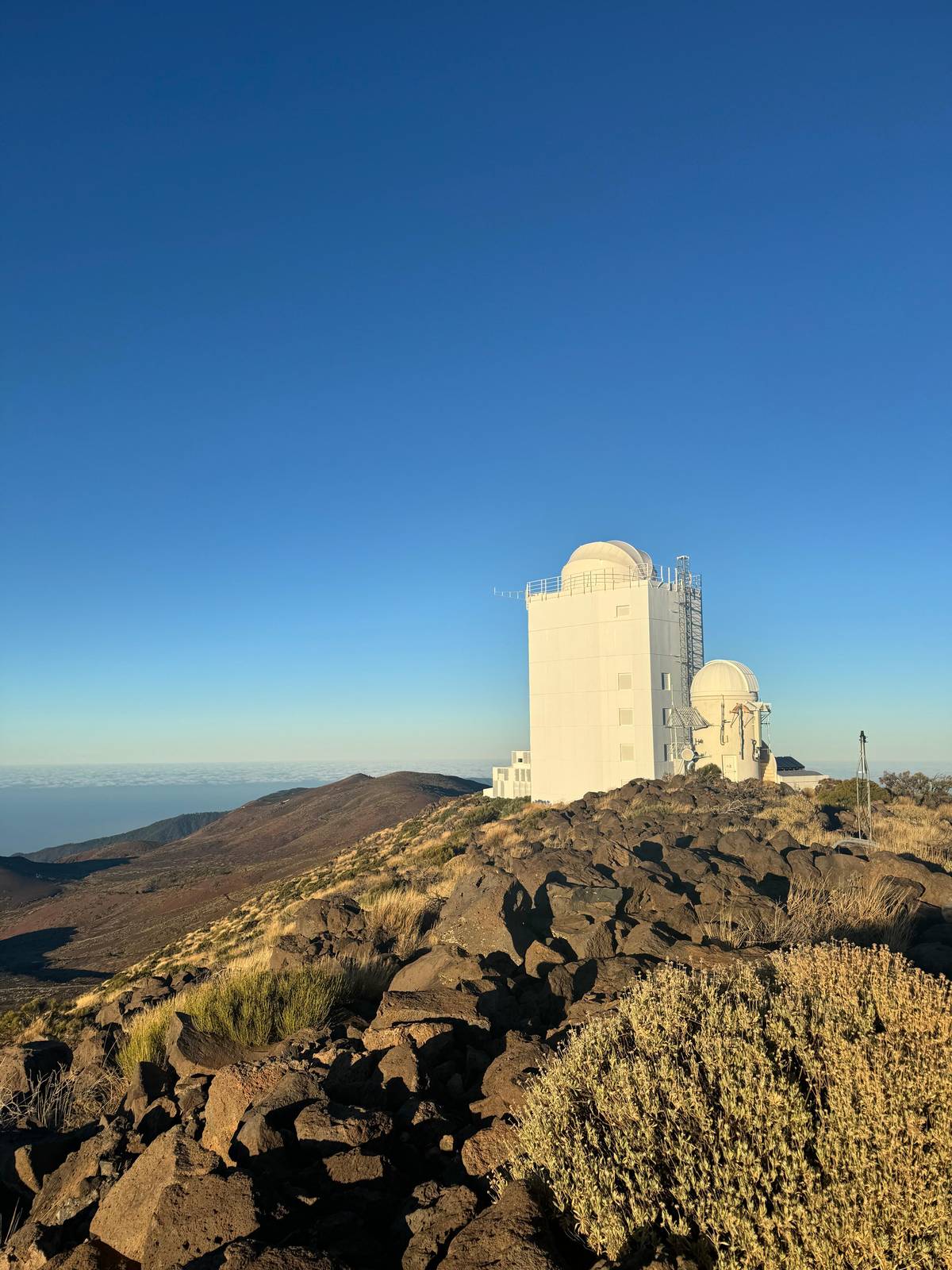
The Teide Observatory belongs to the Instituto de Astrofísica de Canarias (IAC). It stands at Izaña at 2,390 m above sea level, on the point where the municipal boundaries of La Orotava, Fasnia and Güímar meet.1 From the caldera road you see its white domes on the ridge to the east of Teide.
It is a working research site, not a visitor attraction. Turismo de Tenerife describes some 50 hectares holding the solar and night telescopes of more than 60 institutions from 19 countries.5 Astronomers and engineers from many countries work there, by day on the Sun and by night on the stars.
That is why a visit needs planning. The domes do not open on demand, the access road is not a viewpoint, and the scientists are working. A Tenerife observatory night tour solves this by combining an organized afternoon visit with an evening at portable telescopes, outside, under the same sky the observatory was built for.
Astronomy on Teide
Mid-19th century
An observation post at 3,300 m on the mountain.6
1910
Jean Mascart observes it from Guajara.7
1916
Weather records begin at Izaña.8
1964
The University of Bordeaux studies the zodiacal light.9
1979
The study of the Sun's vibrations is born here.10
1992
The IAC opens it to apply the Sky Law.11
The surprise for many visitors is that Teide is above all a Sun observatory. The IAC explains that its position between the solar observatories of the east and the west, together with the quality of its sky, led to the site being dedicated mainly to the study of the Sun.2 It hosts the best European solar telescopes, such as the 1.5-metre GREGOR.2
The science began early. The first telescope at the site was set up by the University of Bordeaux in 1964 to study the zodiacal light, the faint glow of sunlight scattered by dust between the planets.9 In 1979 the observatory became the birthplace of helioseismology, which studies the Sun's interior through its vibrations.10
Night astronomy happens here too. The observatory also hosts night-time telescopes, robotic and remotely operated telescopes, and experiments on the cosmic microwave background.12 The first-ever detection of a brown dwarf, named Teide 1, was made here.13
How long each option lasts
Telescopes compared
| Telescope | Size | Who uses it | Note |
|---|---|---|---|
| GREGOR | 1.5 m | Solar researchers | Best European solar telescopes |
| Large-telescope session | 32-inch | Small public groups | Up to 12 guests |
| Booked evening's scope | 12-inch Dobsonian | Evening guests | With a laser pointer |
| Astrophysicist session | 8-inch | Up to 10 guests | At the Parador |
From the IAC and each GetYourGuide listing.2
Three ways to meet the observatory
Booked hereAfternoon visit, then stars
 Shortest
 Biggest scope
Decision helper
Choose by what you want to understand or see
An afternoon at the observatory, then the stars.
A 1.5-hour guided visit with two solar telescopes.
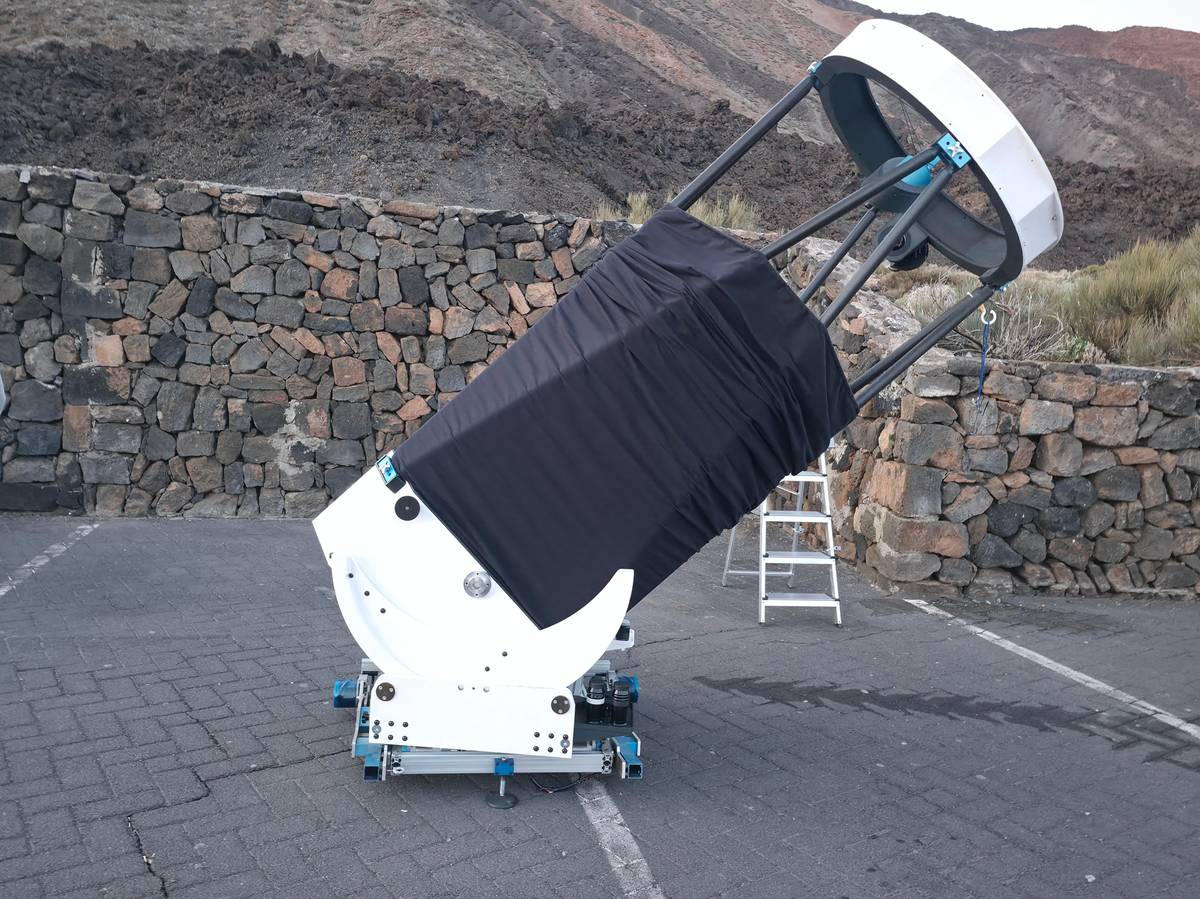
A 32-inch telescope for small groups of up to 12.
It is not recommended for children under 8, and warm clothing is required to join.
IAC visits are suspended from December to March.4
Teide Observatory also hosts other kinds of excellent professional instruments, including standard nocturnal telescopes, robotic and remotely operated telescopes, and experiments to measure the cosmic microwave background radiation.
Teide drew astronomers long before the domes went up. Turismo de Tenerife records that Piazzi Smyth set up an observation post at 3,300 m in the mid-19th century, and that lunar features were named Teide and Tenerife in tribute to his work.6
In 1910 the French astronomer Jean Mascart observed Halley's comet from Guajara, the third highest point of today's park at 2,715 m.714 A weather station has stood at Izaña since 1916, and it still supplies the climate figures we use on this site.8
The sky itself became protected by law. The Sky Law, Law 31/1988, guards the astronomical quality of the Canary Island observatories, and the IAC set up a technical office in January 1992 to advise on applying it.11 It regulates outdoor lighting on the part of Tenerife visible from La Palma and even air traffic over the observatories.1516
Map
First the island with the towns tours leave from, then the high caldera with its viewpoints and the observatory, then the few hundred metres around the Parador where many sessions meet.
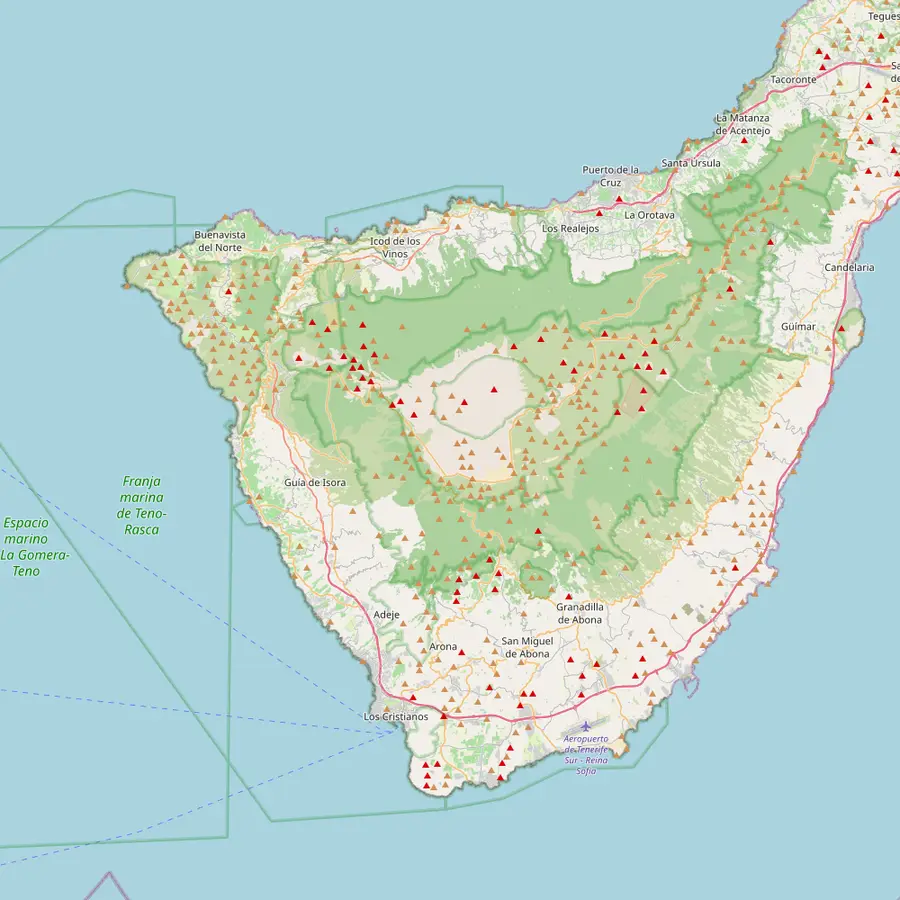 1Teide summit2Puerto de la Cruz3La Orotava4El Portillo5Teide Observatory6Los Cristianos7Costa Adeje8El Médano9Los Gigantes10Vilaflor11Mirador de Samara12Parador de Las Cañadas
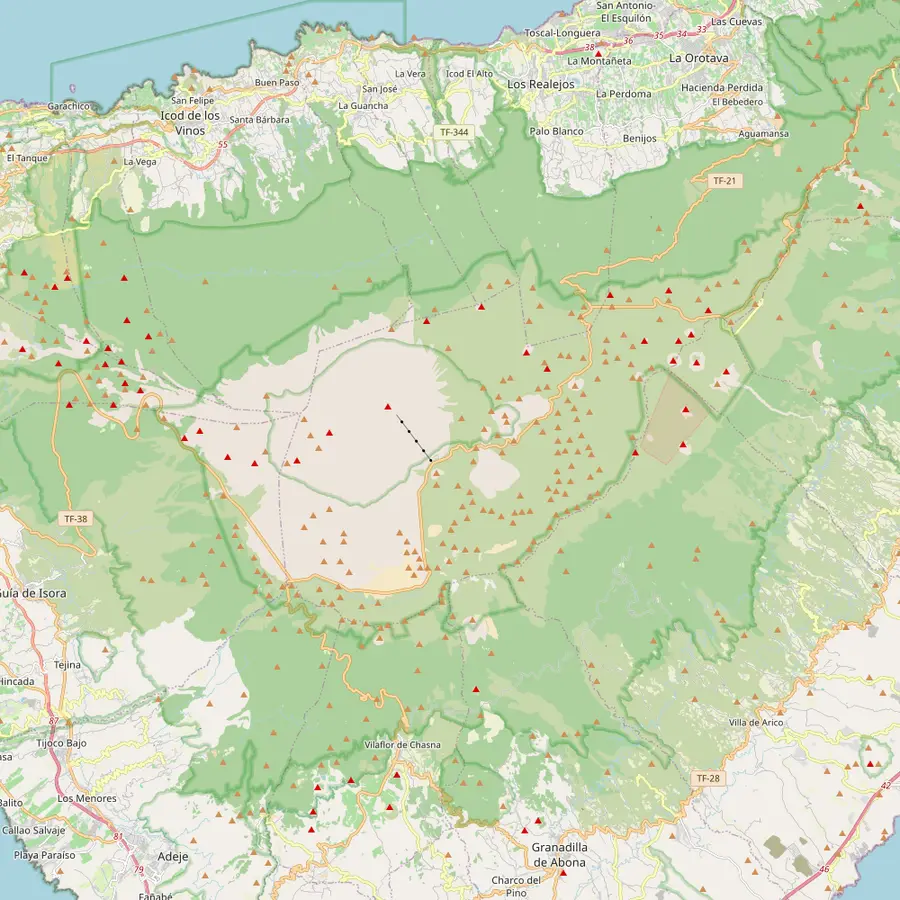 1Teide summit4El Portillo5Teide Observatory11Mirador de Samara12Parador de Las Cañadas13Cable car base station14Llano de Ucanca15Minas de San José16Guajara17Boca de Tauce
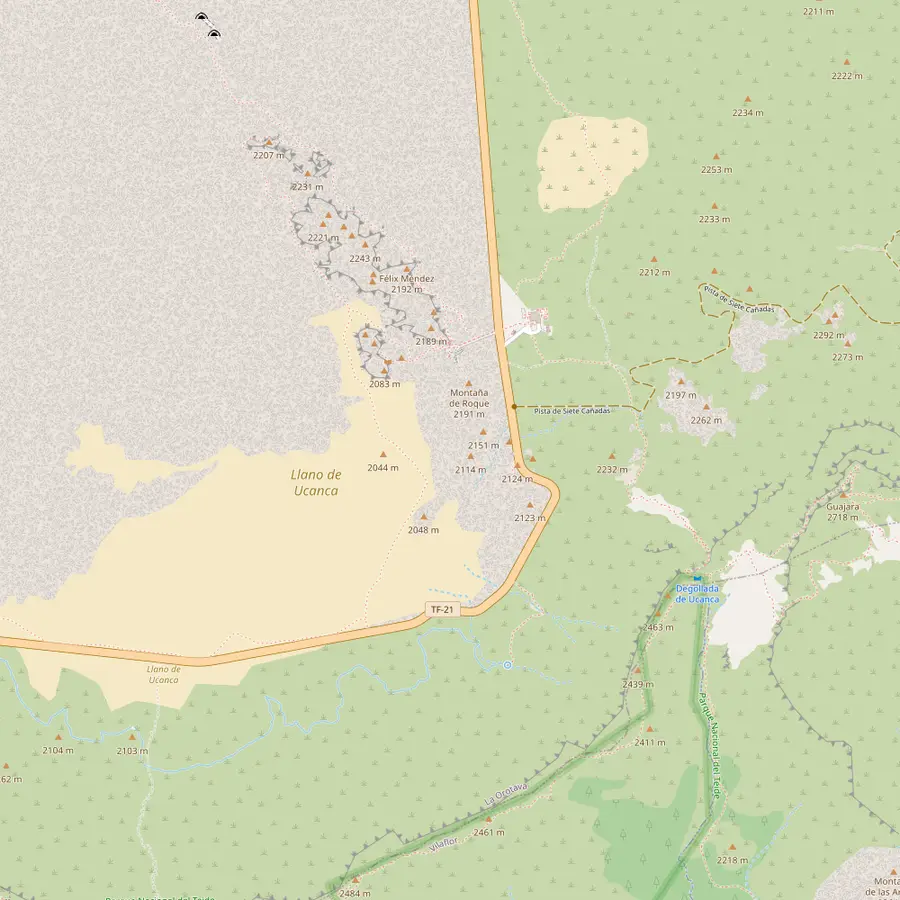 12Parador de Las Cañadas14Llano de Ucanca19Roques de García20La Ruleta
The highest peak in Spain, 3,715 m; the site tour stays at public viewpoints below it.17
In Google Maps ↗The north-coast town where bus 348 starts its climb to the Parador.18
In Google Maps ↗The TF-21 runs 31 km from here up to El Portillo.19
In Google Maps ↗Visitor centre at the north gate of the caldera, open 9:00 to 16:15.20
In Google Maps ↗The IAC observatory at Izaña, 2,390 m, mainly a solar observatory.12
In Google Maps ↗The VIP option of the site tour drops guests back here and along the south coast.
In Google Maps ↗Inside the pickup zone of the site tour, which runs from El Médano to Los Gigantes.
In Google Maps ↗The eastern end of the site tour's pickup coast.
In Google Maps ↗The western end of the site tour's pickup coast.
In Google Maps ↗The TF-21 from the south climbs through Vilaflor to Boca de Tauce.19
In Google Maps ↗Sunset viewpoint used by small-group picnic tours, 80 minutes on one listing.
In Google Maps ↗The only hotel in the park, with a public coffee shop; the Ermita de las Nieves stands beside it.21
In Google Maps ↗The cable car climbs from 2,356 m to 3,555 m in roughly 8 minutes.22
In Google Maps ↗A viewpoint at the foot of the TF-21 on the caldera floor.23
In Google Maps ↗Meeting point for an 80-minute telescope session; come by car.
In Google Maps ↗The third highest point in the park, 2,715 m, where Mascart watched Halley's comet in 1910.147
In Google Maps ↗Where the TF-21 from the south and the TF-38 from Chío meet.19
In Google Maps ↗Rock towers beside the Parador; a picnic tour stops here.21
In Google Maps ↗Viewpoint next to the Roques de García with room for a telescope.24
In Google Maps ↗Checklist
Cost calculator
Starting totals for the observatory and telescope options.
Total from$251
from, per person $126
Check availabilityfree cancellationStarting prices from each GetYourGuide listing, turned into your currency with the European Central Bank rate; the booking page shows what you will actually pay.
Video
No video data loads before you press play.
Yes, with a reservation. The IAC offers guided private and group visits to the Teide Observatory by prior booking, and children under 16 go free.3 Visits are suspended from December to March because of adverse weather, so plan a visit for the warmer half of the year.4
The IAC also holds free open days. In 2026 they ran on 20 and 21 June, in Spanish, lasting 3 hours, with registration required.25 Inside, an empty telescope dome has been turned into an outreach center that seats up to forty people, where visitors learn how an observatory and its telescopes work.26
There is also a short guided visit sold on GetYourGuide. It lasts 1.5 hours, lets you look at the Sun through 2 solar telescopes and visits one of the night telescopes. It starts from $25 and averages 4.57 from 871 reviews. The listing notes there is less oxygen at about 2,400 m and advises against it for people with anaemia, heart or breathing problems.
The tour this page books combines both halves. It spends the afternoon at the Teide Observatory, watches the sunset from a viewpoint, then stargazes with the naked eye and telescopes. It lasts 8 hours, pickup is included, groups are small, and the guides speak Spanish and English.
It has a plan for bad weather. If clouds spoil the solar telescopes, the group visits two night telescopes instead of one; if the stars cannot be seen at night, the guides give a virtual tour of the night sky. It is not recommended for children under 8, and guests without the required warm clothing are not allowed to join.
Prices start from $126, it averages 4.45 from 127 reviews, and cancelling costs nothing until 24 hours ahead, with payment deferred if you like. The pickup time varies with the season and the sunset. Keep in mind that IAC visits are suspended from December to March, so ask the operator what the afternoon includes in winter.4
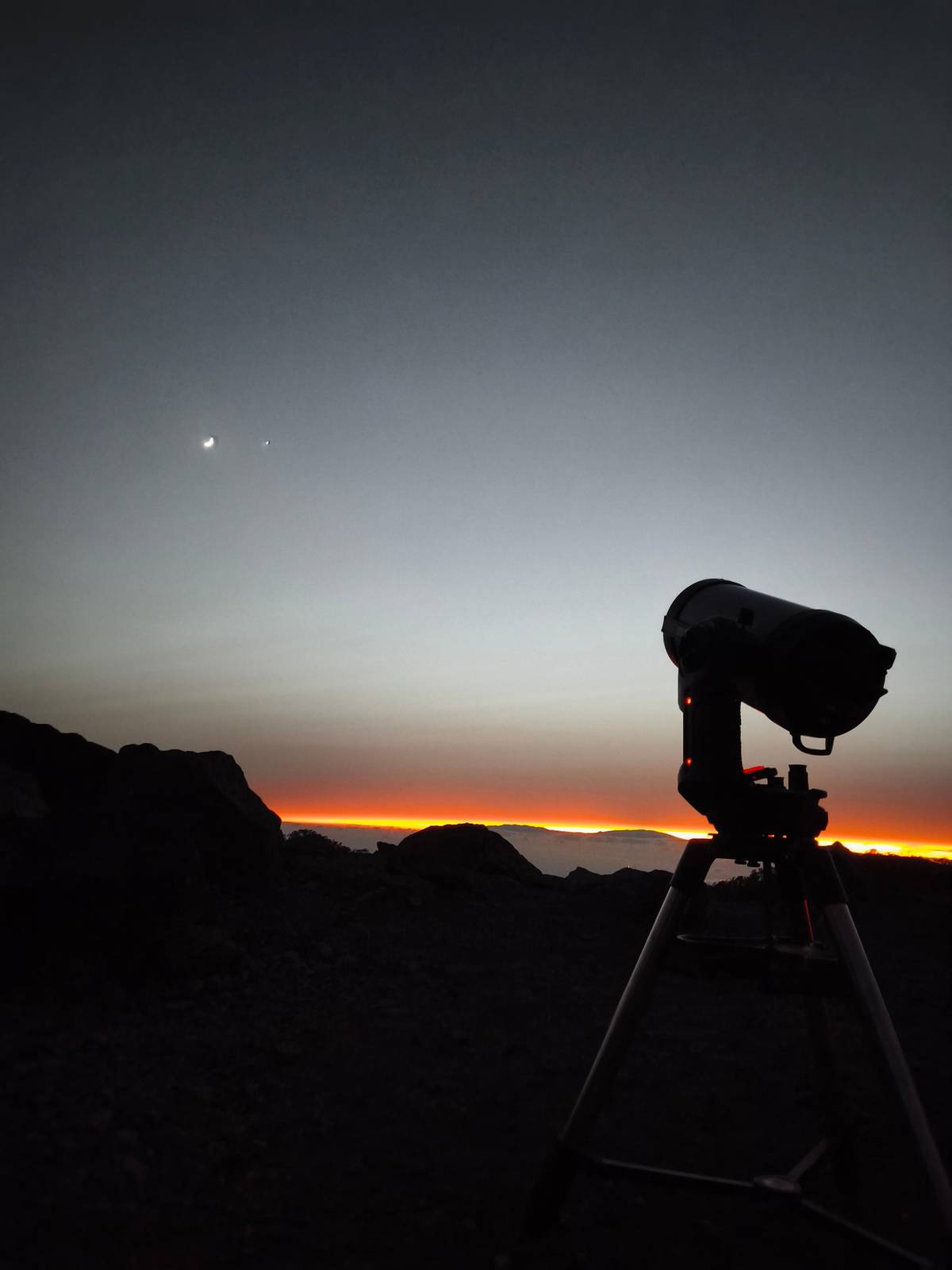
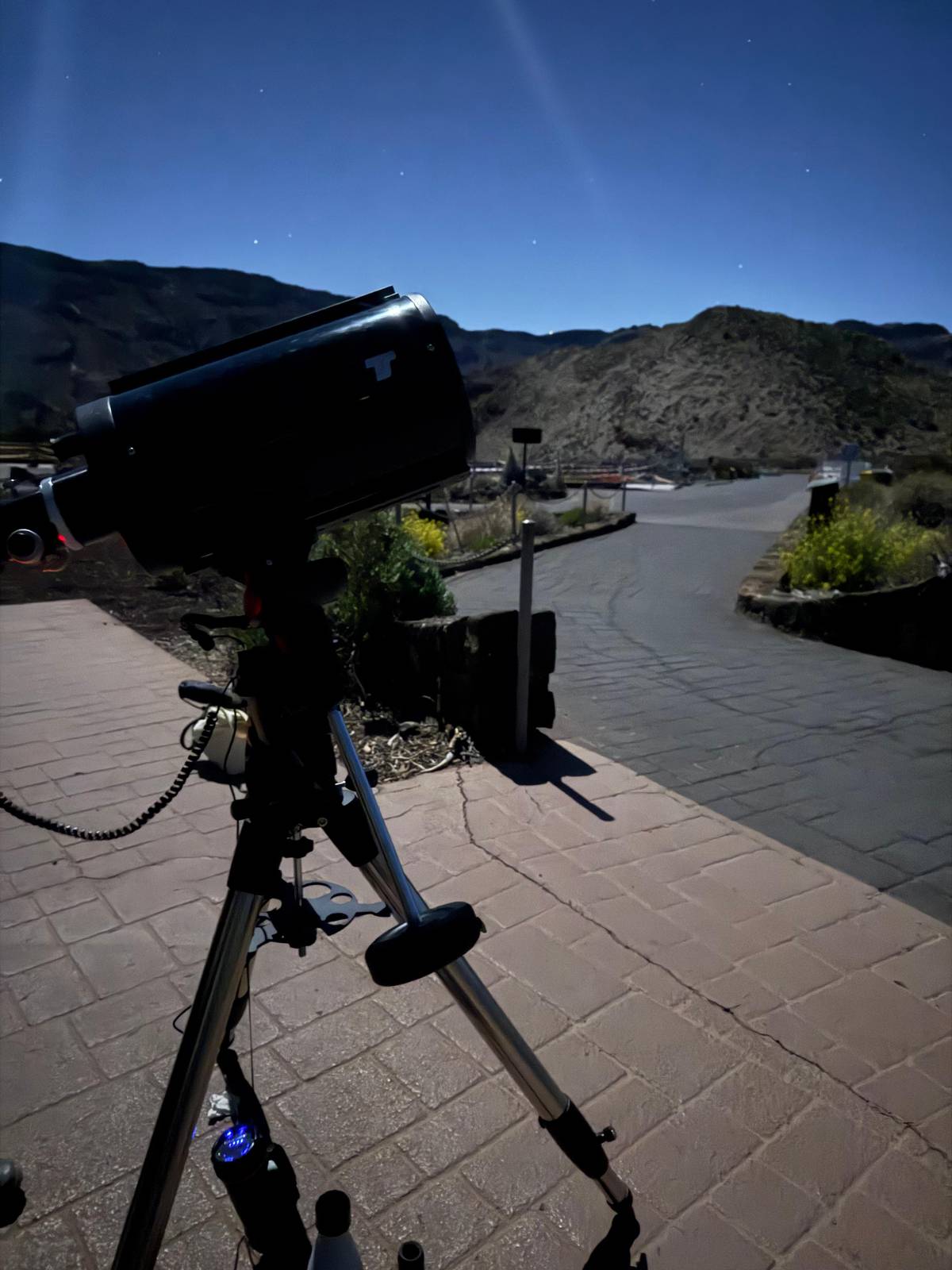
The research telescopes are not for public stargazing, so at night you look through the instruments the tour operators bring. The size of a stargazing telescope on Teide varies a lot from one listing to the next, and a bigger mirror gathers more light, which shows fainter galaxies and nebulae.
At the top end, one session brings a 32-inch telescope to small groups of up to 12. The evening booked on this site's homepage uses a 12-inch Dobsonian, and the astrophysicist session at the Parador an 8-inch telescope. One session near Minas de San José keeps a second telescope only for astrophotography and sends you the images.
Do not judge an evening by aperture alone. A smaller telescope with a good guide who finds the right objects, explains them and lets everyone look for long enough can beat a bigger one with a long queue. Ask how many people share each instrument, and whether you will see planets on your date. It also helps to know what kind of telescope you are looking through: a large reflector such as a Dobsonian gathers plenty of light for faint objects, while a smaller, sharper instrument can give crisp views of the Moon and the planets. A good guide will tell you which is which, and why they chose it for the night.
Izaña is reached from the TF-24, which climbs 30 km from La Laguna through La Esperanza to El Portillo, or from El Portillo after the TF-21 from La Orotava.19 From the south coast the drive is long, which is one reason a tour with pickup is the easy option.
The altitude is real. At about 2,400 m there is less oxygen, and the gravel paths between the domes add a little effort. Bring water, sun protection for the afternoon and warm clothing for the night: at Izaña the average low is 1.1 °C in January and 14 °C in July.27
If you cannot fit in an observatory visit, the evening still works without it. The sky over the park is the same one the astronomers use, and a guided stargazing session shows you planets, clusters and galaxies through a telescope. The observatory adds the story of how professionals study that sky. If you can only do one, decide whether you are more curious about the science or the view: the afternoon among the domes explains how astronomy works, while a long session at a telescope after dark lets you see for yourself.
Your night on Teide
Hotel pickup in the south or your own car; choose an evening, and change your mind free until 24 hours ahead.
Not on your own. IAC visits are guided and booked in advance; night tours add stargazing outside.3
2,390 m. It stands at Izaña, where La Orotava, Fasnia and Güímar meet.1
IAC visits pause. Visits are suspended from December to March because of adverse weather.4
The Sun. It hosts the best European solar telescopes, such as the 1.5-metre GREGOR.2
8 hours. Afternoon at the observatory, sunset, then stargazing, with pickup included.
From 8 years. It is not recommended for children under 8, and warm clothing is required to join.
A 32-inch. One stargazing session uses it with small groups of up to 12.
Sources