 Light layers
Summer night
Low around 14 °C
- Top
- Long sleeves, fleece
- Legs
- Long trousers
- Feet
- Closed trainers
Guides
Language
EnglishCurrency
US dollar · $Your currency applies on GetYourGuide too.
Guide · Clothing and cold
The Mount Teide stargazing temperature is nothing like the beach you left in the afternoon. Here are the mountain's real averages, month by month, and the layers that keep you warm.
Editorial team, tenerifestargazingtour.comUpdated October 23, 20266-minute read13 sources
Quick answer
The best measure of the Mount Teide stargazing temperature is AEMET's Izaña station, which stands at 2,369 m beside the Teide Observatory and publishes official normals for 1981 to 2010.2 Its average January low is 1.1 °C and its average July low is 14 °C.1
Compare that with the south coast where most visitors stay. At AEMET's Tenerife Sur airport station, 64 m above sea level, the average January low is 15.2 °C and the average July low is 20.2 °C.435 In winter the mountain night is far colder than the coast, and even in summer the gap is large enough to need a jacket.
Remember what these figures describe. Izaña sits higher than the sunset viewpoint on the evening booked here, which is given at 1,400 m, so that stop is somewhat milder. The stargazing stops of most tours lie between the two, and wind can make any of them feel colder than the thermometer says.
One evening, three climates
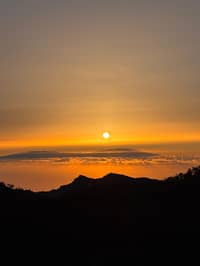
Afternoon
T-shirt weather: the January low there is 15.2 °C.3
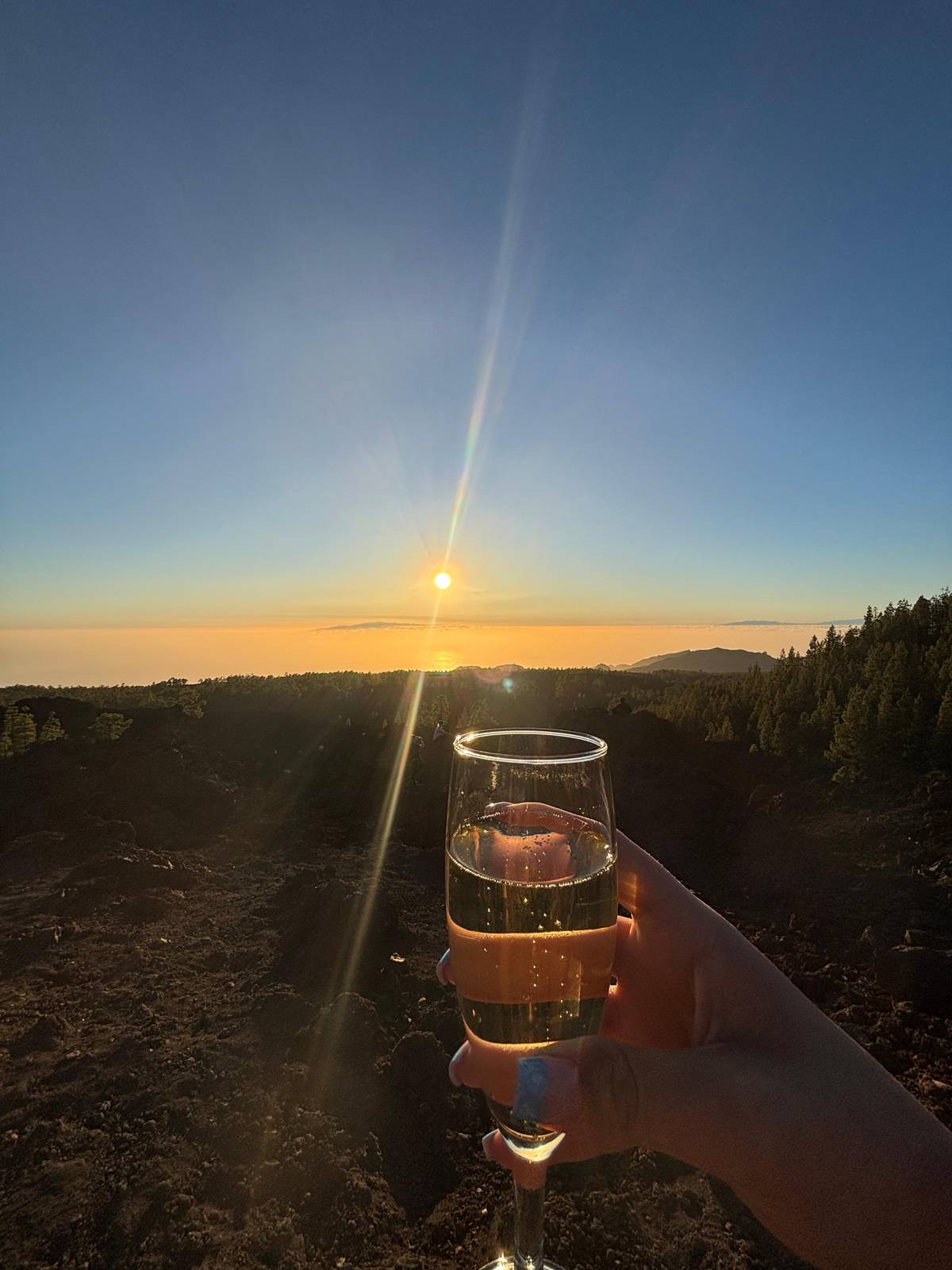
Sunset
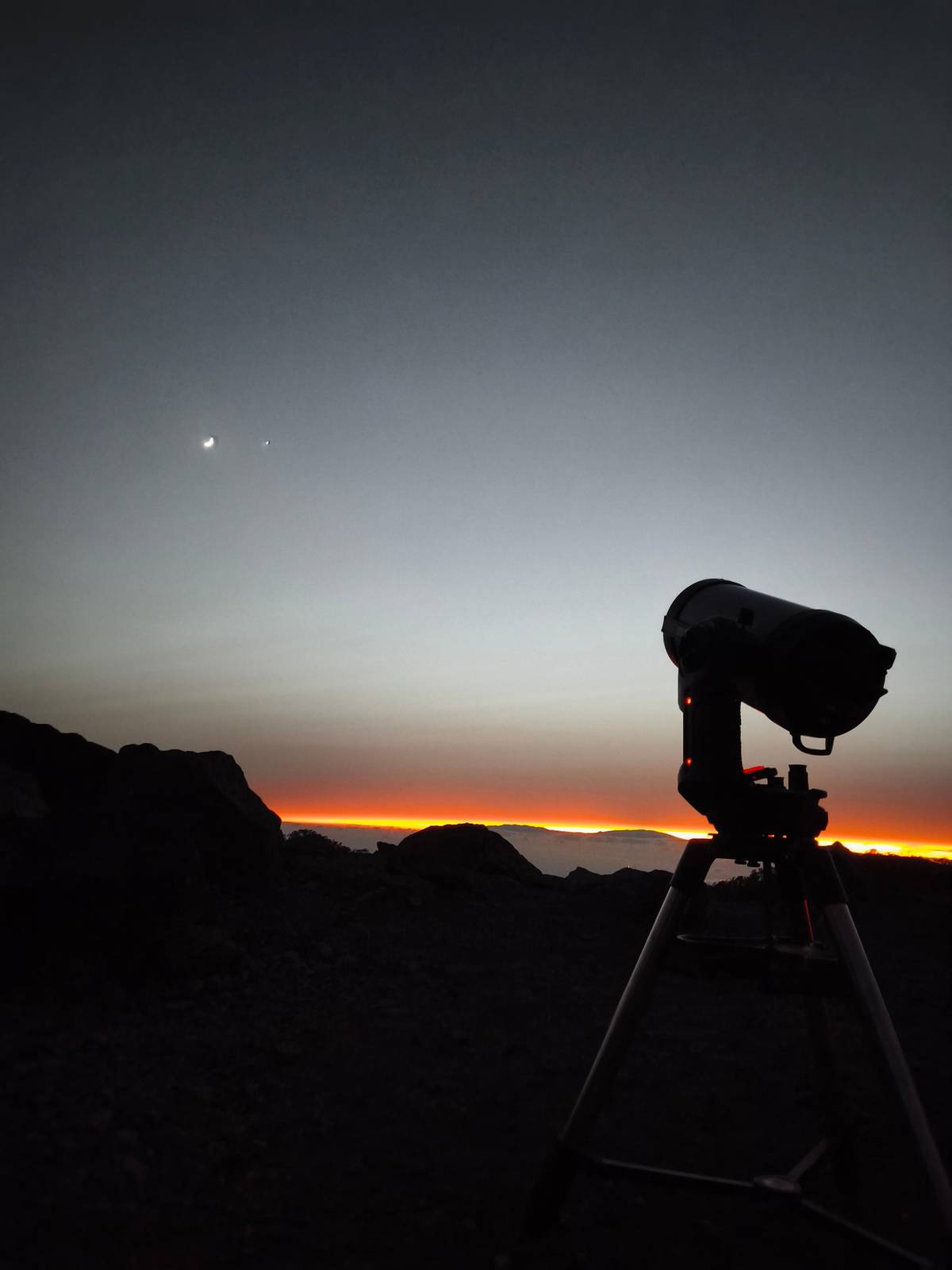
At 1,400 m, add a fleece as the sun goes down.
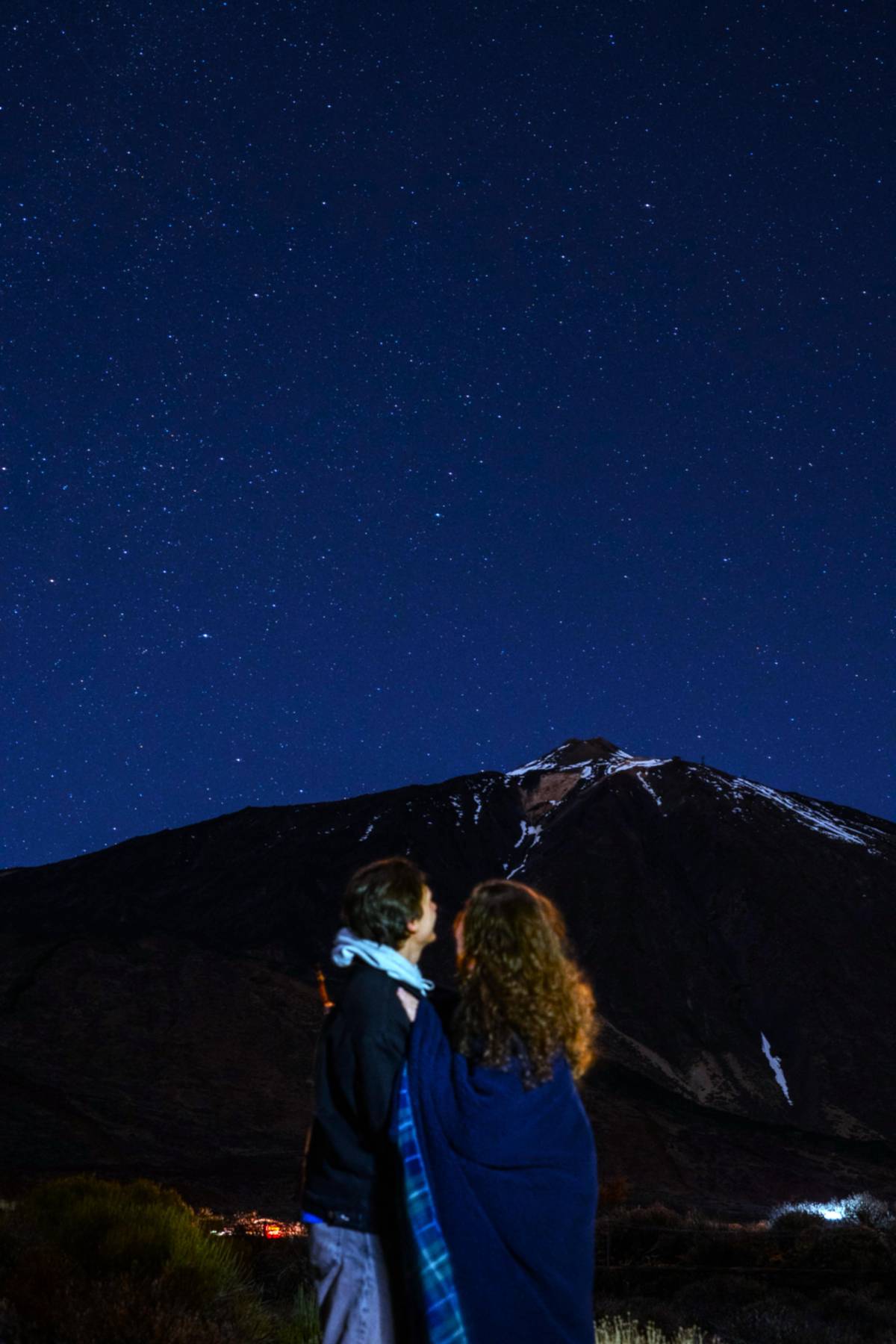
After dark
Jacket, hat and gloves for 2.25 hours of standing still.
Late night
On winter nights it can drop below freezing up high.6
Back down
Layers come off as the van descends.
Part of the surprise is the contrast within a single day. The park describes its own climate as dry, with strong contrasts between day and night, low humidity and often strong winds.7 A warm, sunny afternoon at the viewpoint can turn into a sharp, windy night within an hour of sunset.
The other part is that stargazing means standing still. On the evening booked here, the guided session at the second viewpoint lasts 2.25 hours, most of it spent looking up or waiting your turn at the telescope. You generate little heat, and the cold creeps in through your feet and hands first.
Turismo de Tenerife puts it plainly: the best stargazing areas are the island's highest points, so bring warm clothing, because on cold winter nights temperatures can easily drop below freezing.6 It also recommends a coat or jacket and a hot drink for any night of stargazing high up.8
Month by month
Coast and mountain
Three outfits
Light layersLow around 14 °C
 Warm layers
Lows of about 3 to 7 °C
 Full winter kit
Low around 1 °C
Decision helper
It depends on the month and how you get there
Especially on cold winter nights when temperatures can easily drop below freezing.
The evening booked on this page publishes its own list. It asks for comfortable or sports shoes, warm clothing and warm shoes, a jacket, a long-sleeved shirt and long trousers. That is the minimum for the guides to be happy with you on the viewpoint, and it is sensible advice whatever the month.
On the VIP option, with pickup on the south coast, warm jackets are included for the cold part of the night. On the self-drive option they are not, so you bring everything yourself in the car. Even with a lent jacket, wear your own warm layers underneath; one coat on top of a T-shirt is not enough in winter.
There are no toilets at or near the stargazing places, and food is not included. Eat before you leave, go before the van sets off, and keep any hot drink in a closed thermos. A small backpack with your layers frees your hands for the camera and the telescope eyepiece. Pack it so the warmest items sit on top, because you will reach for them in the dark, and put a spare pair of socks in a side pocket: dry feet stay warm far longer than damp ones.
Packing list
Video
No video data loads before you press play.
In summer, the mountain is cool rather than cold. With an average July low of 14 °C at Izaña, long trousers, closed shoes, a long-sleeved top and a fleece or light jacket usually do the job.1 One recent guest wrote that long trousers, trainers, a T-shirt and a thin zip-up jacket were warm enough on a July night after a hot day.
Spring and autumn ask for more. The average low at Izaña is 3.5 °C in April and 4.5 °C in November.1 Add a warm mid-layer such as a thick fleece or a light down jacket, and keep a windproof shell on top, because a breeze on an exposed viewpoint can make a mild night feel wintry.
Winter is real mountain cold. January averages 12.3 frost days at Izaña, and the station's coldest record, from a long series, is −9.8 °C on 26 March 1971.910 Wear thermal underwear, a down jacket, a hat, gloves and a scarf, and thick socks in proper shoes.
Shoes matter more than most people expect. One telescope operator asks for closed shoes, no sandals or flip-flops, and warns that at 2,000 m night temperatures can drop to 5 °C or below, even in summer. The ground at the viewpoints is volcanic gravel and rock, and cold rises through thin soles quickly.
Hands go next, especially if you want to take photos or adjust a tripod. Thin gloves that still let you use a phone screen are worth packing in any month but high summer. A hat keeps far more warmth in than its size suggests, and a buff or scarf stops the wind finding your neck.
Another operator gives its own seasonal guide: warm clothing for temperatures of 0 to 4 °C from October to March, and 10 to 15 °C from April to September. Treat those ranges as a rough guide: at Izaña the average low is still 3.5 °C in April and 5.8 °C in May, colder than the operator's summer range, so they are a starting point for packing rather than a promise.1 If you are unsure, pack for the colder end of the range: an extra layer weighs little in the van and can make the difference between enjoying the second hour at the telescope and counting the minutes until the drive back.
Wind is the factor that turns cool into cold. The strongest gust in the Izaña records reached 248 km/h, on 28 November 2005.11 Such storms are rare, but even an ordinary breeze strips heat away fast, which is why a windproof outer layer is the single most useful item you can pack.
Snow is possible in winter. The park says it can snow on some winter days, though near the Parador it falls only a couple of days a year, and forecasts usually warn of it.712 Winter weather can also make the roads up to Teide unsafe, and one operator states that its trips may be cancelled for that reason.
On the evening booked here, the guides keep the group at the lower viewpoint for the stargazing if wind, cloud or cold make the upper one unsuitable. Dress as if you will be at the colder stop anyway: it is easier to take a layer off than to wish you had brought one. Check the forecast for the mountain, not for your resort, on the morning of your evening.
Cold is not the only effect of height. The evening booked here is not suitable for people with altitude sickness, and children under 5 are not allowed on its VIP option. If you have felt unwell at altitude before, a lower viewpoint or a coastal evening is the safer choice.
Other listings are more specific. The daytime observatory visit notes that at about 2,400 m there is less oxygen and advises against it for people with anaemia, heart or breathing problems. The cable car evening does not allow people with heart problems or pregnant women on its ride to the upper station.
For most healthy travelers a stargazing evening is gentle: short walks on gravel, then standing and watching. Drink water during the day, go easy on alcohol before the drive up, and tell the guide if you feel dizzy or breathless. Fires are not allowed in the park, so warm clothing and a hot drink are your only heat source.13
Your night on Teide
Hotel pickup in the south or your own car; choose an evening, and change your mind free until 24 hours ahead.
Around 1 to 14 °C on average. Izaña's average low runs from 1.1 °C in January to 14 °C in July.1
Yes, a light one. The listing asks for a jacket, long sleeves and long trousers in every season.
On the VIP option. Warm jackets are included on the VIP option only; self-drive guests bring their own.
No. One operator asks for closed shoes, no sandals or flip-flops, on volcanic ground.
On some winter days. Near the Parador snow falls only a couple of days a year, usually forecast.12
It can be tiring. Children under 5 are not allowed on the VIP option; dress others very warmly.
Sources