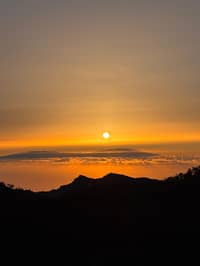
 Booked here
Guides
Language
EnglishCurrency
US dollar · $Your currency applies on GetYourGuide too.
Guide · Night photography
Teide stargazing: Milky Way photos above the caldera
Teide stargazing and a camera belong together. Here is when the Milky Way stands highest, where to set up legally, how to shoot it, and which sessions hand you astrophotos at the end.
Check availabilityfrom $47 · no cancellation fee
Editorial team, tenerifestargazingtour.comUpdated October 23, 20266-minute read21 sources
Quick answer
Why the caldera is made for night photos
A great night-sky photograph needs two things: a dark sky and something interesting in front of it. Teide National Park has both. The park holds the Starlight certification as a tourist destination and as a reserve, and the Sky Law limits outdoor lighting on the part of Tenerife that La Palma can see.67
The foregrounds are extraordinary. The caldera of Las Cañadas holds the Teide-Pico Viejo stratovolcano, and around it stand lava flows, rock towers and empty plains.8 A silhouette of the Roques de García or the cone of Teide under the Milky Way is the shot most photographers come for.
The sea of clouds helps too. On many nights the layer of stratocumulus that the trade winds push against the northern mountains sits between 500 and 1,500 m, well below the viewpoints, and it hides much of the glow of the towns on the coast.9 Above it, the sky can be very dark indeed.
A Milky Way night
From daylight scouting to the last frame
-
Afternoon
Check the Moon
Pick a night near new Moon, dark all night long.10
-
Before sunset
Scout the spot
-
Dusk
Set up and focus
Tripod level, manual focus on a bright star while you can still see.
-
Full dark
Let eyes adapt
15 to 30 minutes with no bright light.13
-
Night
Shoot the series
Several frames, then check one at full size.
-
Late
Pack up by red light
Keep it dim for others still shooting.14
When the Milky Way is at its best
Turismo de Tenerife says that summer is when the Milky Way shows in all its glory, with the Summer Triangle of Vega, Altair and Deneb high overhead.1 Summer is also the clearest season on the mountain: AEMET's normals for Izaña count an average of 23.8 cloudless days in June, 27.0 in July and 24.2 in August.2
The Moon matters even more than the month. A full Moon rises at sunset and sets at sunrise, lighting the whole night and washing out the faint band of the Milky Way.3 Around new Moon the Moon is up during the day, so the night is fully dark, and a third quarter Moon only rises around the middle of the night.1015
The cycle repeats about every 29.5 days, so in any summer month there is a stretch of dark evenings.16 Check a moon calendar for your trip, then plan your Milky Way night in the darkest part of it. Turismo de Tenerife's own advice is to avoid the Moon, especially when it is full.14
Who takes the photo
Night photos on guided sessions
| Evening | Photo | Included | Length |
|---|---|---|---|
| Session booked here | Astrophotos sent afterwards | Yes | 80 min |
| Homepage evening | Guest photo under the stars | Yes | 3-6 hrs |
| Large-telescope session | Astrophotography package | Yes | 3 hrs |
| Optional-dinner tour | Professional photos | Optional extra | 3-6.5 hrs |
From each GetYourGuide listing's own inclusions and durations.
Three photo evenings
Astrophotos, a portrait, or a big telescope
Booked here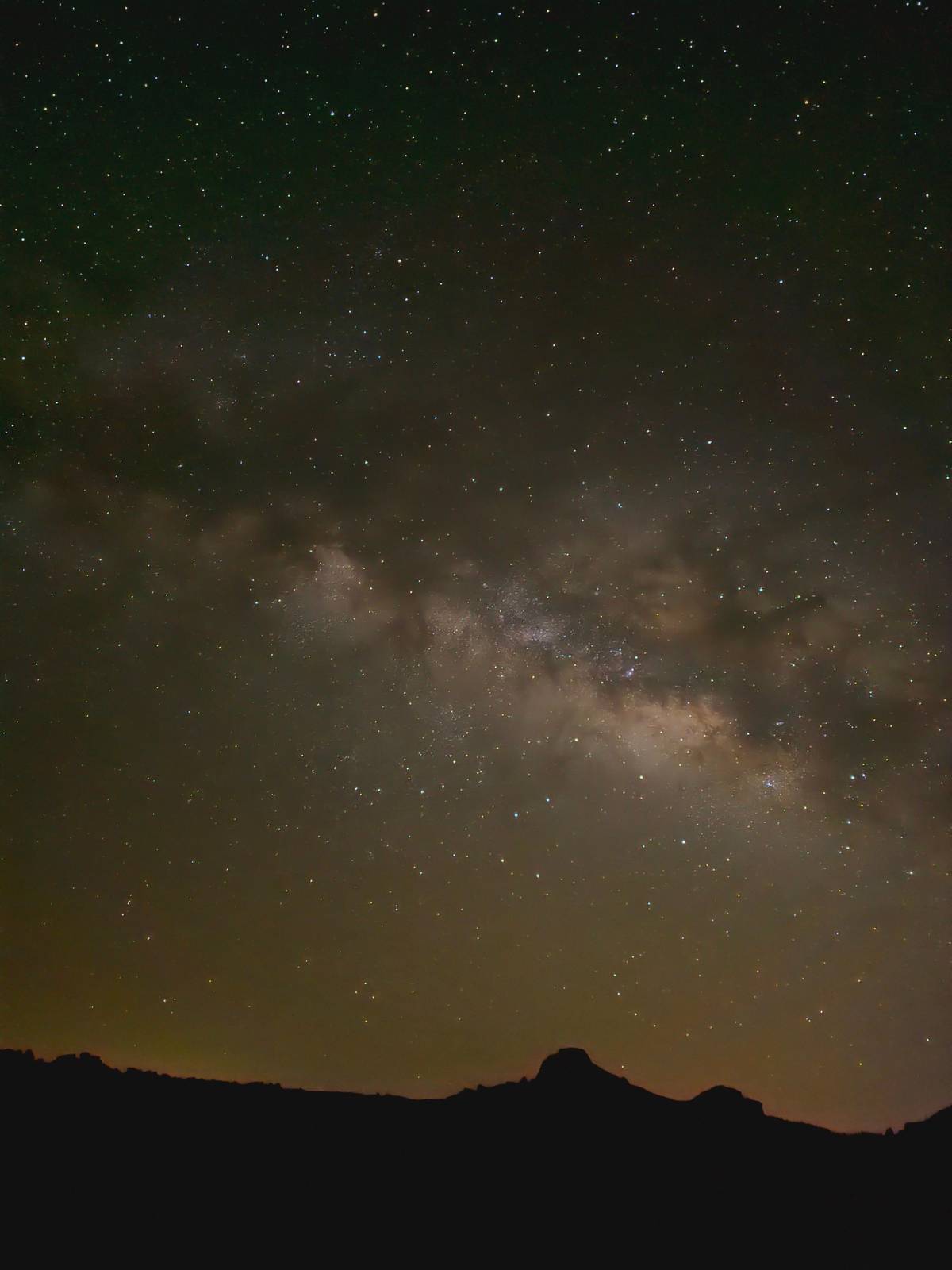 With pickup
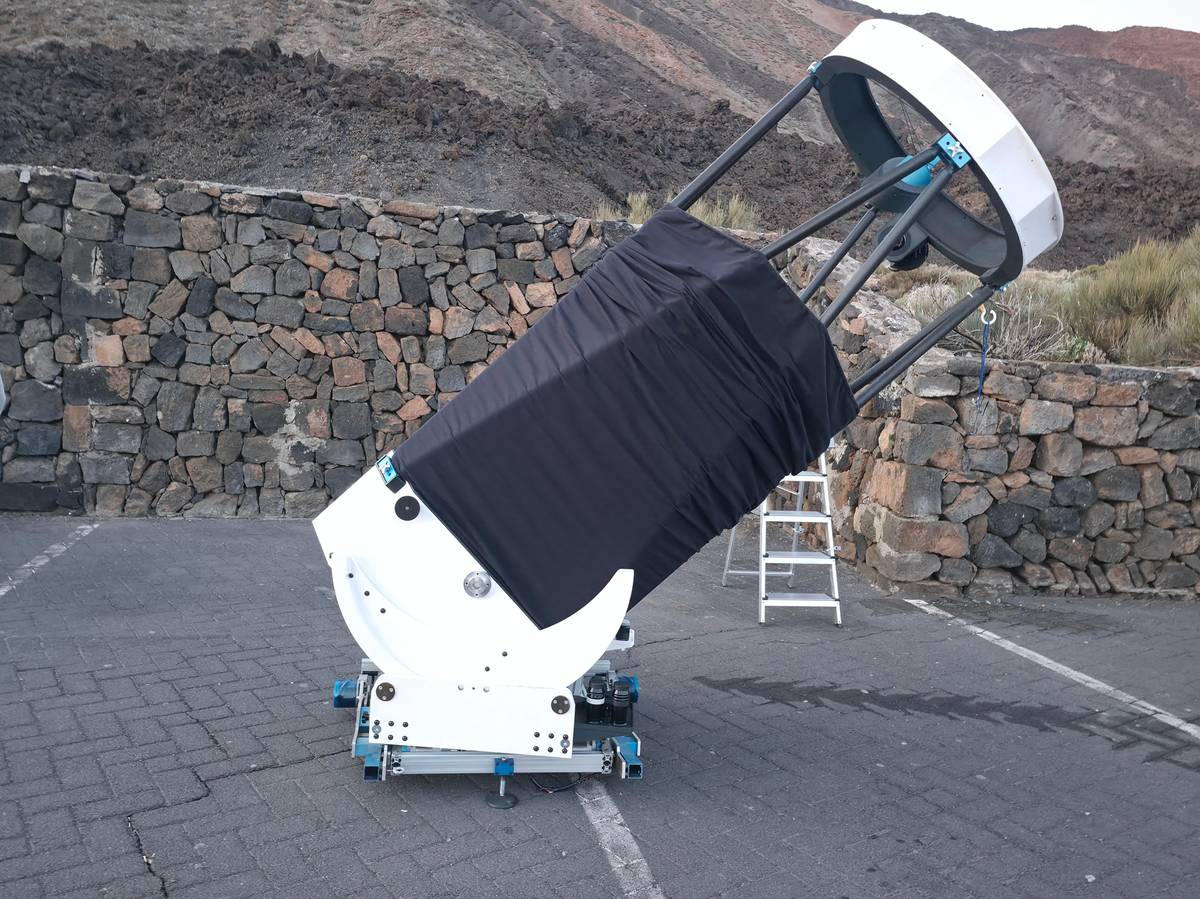 Biggest scope
Decision helper
Your camera or theirs?
Choose by your gear and what you want to take home
Homepage evening
Each guest gets a photo taken with astrophotography techniques.
Astrophoto session
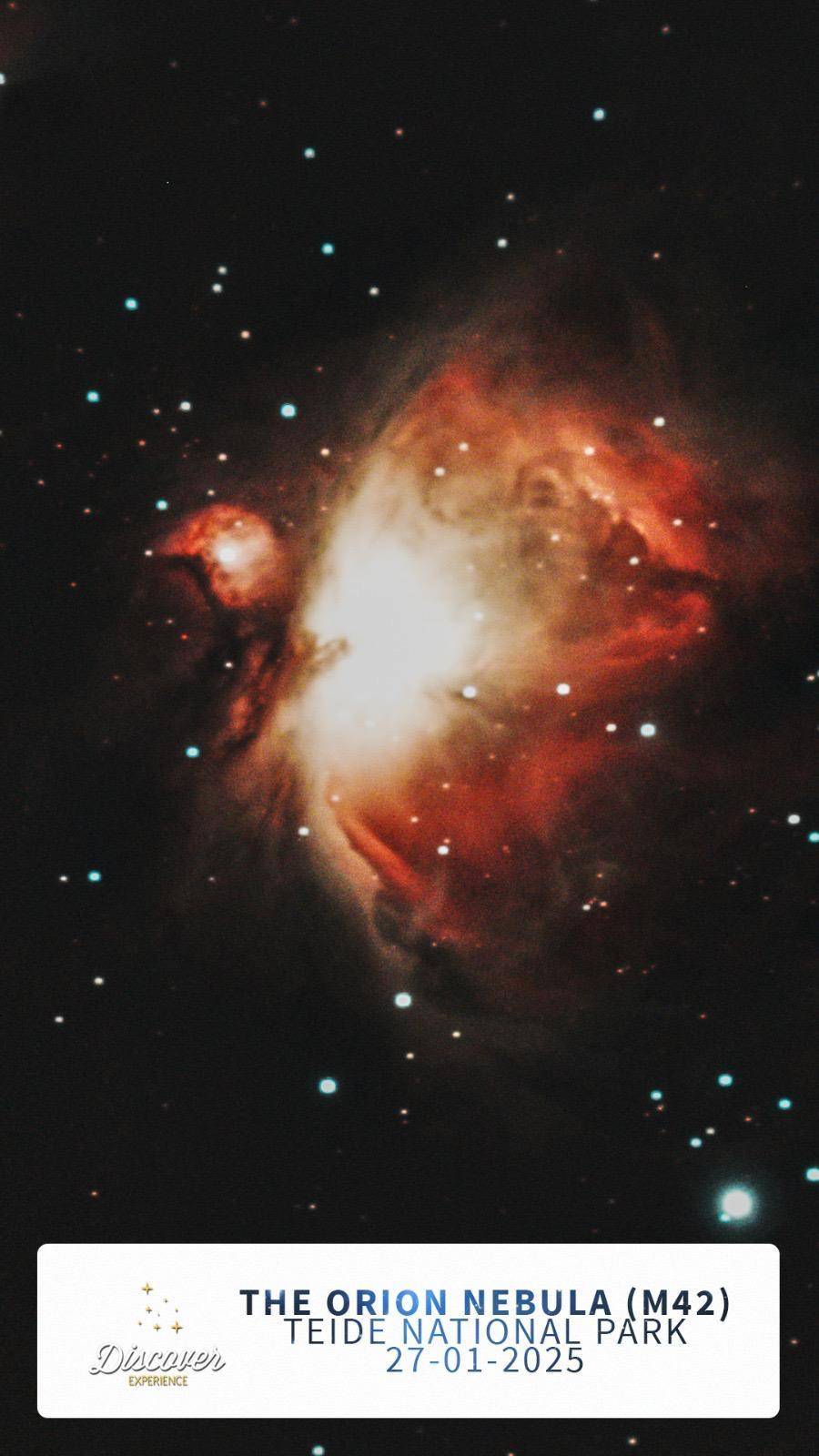
A second telescope captures objects and the images are sent to you.
Shoot on your own
La Ruleta has space for equipment beside the Roques de García.11
Ask the park first
Professional photography needs prior authorization.4
Not here
The park lists drones among the aerial activities to avoid, with kites and balloons.5
The stunning nebulous band of the Milky Way in all its glory. The Summer Triangle. A singular formation of three bright stars: Vega, Altair and Deneb.
Where to set up your tripod
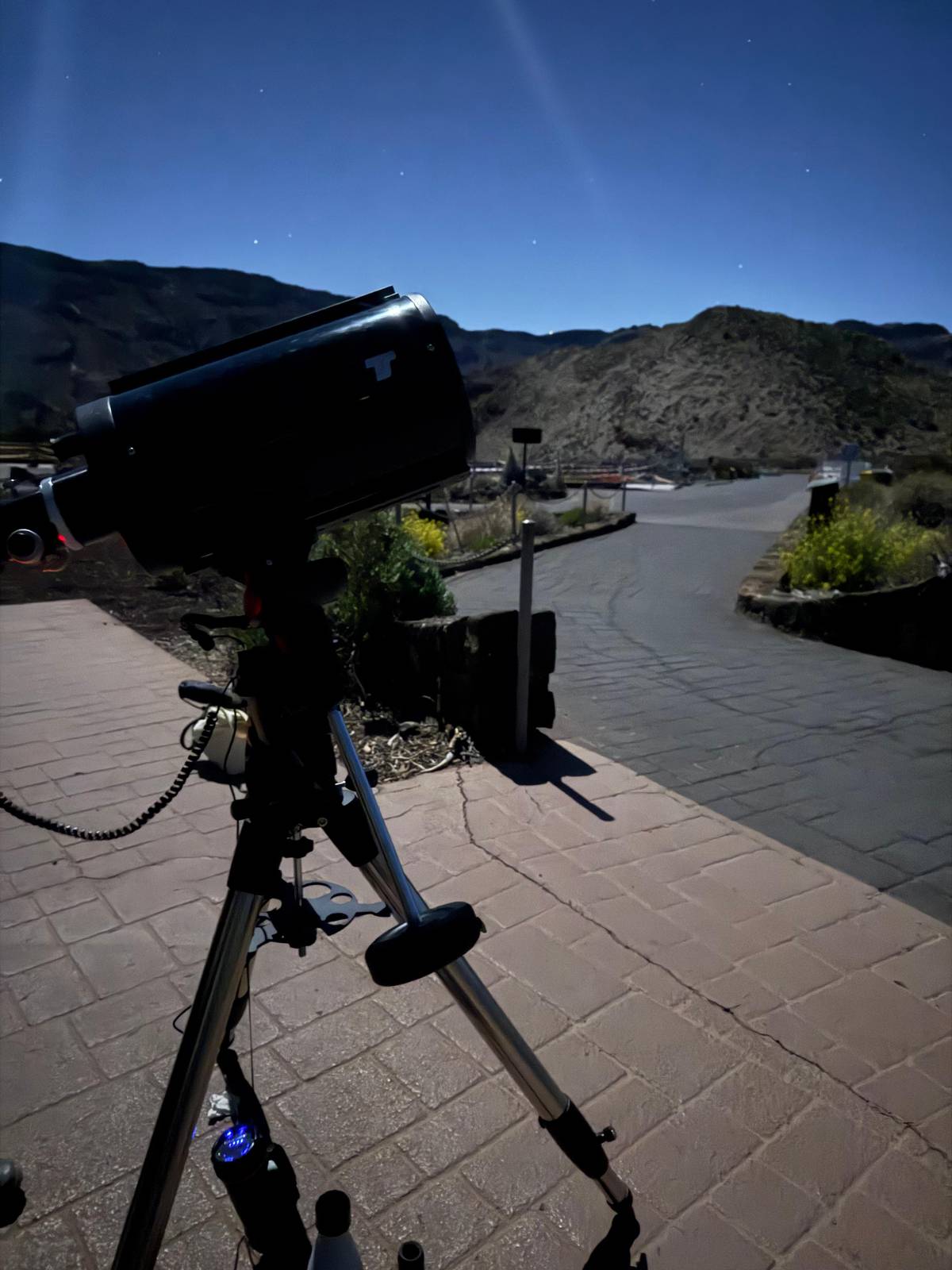
Turismo de Tenerife points to La Ruleta viewpoint, right next to the Roques de García, as a place with plenty of space to set up a telescope, which also makes it a good place for a tripod.11 The rock towers give you a strong foreground, and the Parador's large car park is close by.19
The Llano de Ucanca viewpoint at the foot of the TF-21 offers a wide, open plain, useful for panoramas of the whole sky, and the Tabonal Negro viewpoint beside the TF-21 has a small car park.20 Scout your spot in daylight: in the dark, the edges of lava fields and viewpoint walls are hard to see.
Stay within the rules while you compose. Park only in the designated areas and keep to authorized roads and paths, however tempting a shot from the lava looks.12 Tents, chairs and other outdoor furniture may not be set up outside authorized areas, so travel light: a tripod, a bag and warm clothes.21
Checklist
Your Milky Way kit
01
Gear
- Camera with long exposures and a wide lens
- A solid tripod and a remote release
- A red or dimmable light
02
Plan
- A night near new Moon
- Scout the spot in daylight
- Warm layers for standing still
Cost calculator
Price a photo evening for your group
Starting totals for sessions that include night photos.
People
Total from$81
from, per person $41
Check availabilityfree cancellationStarting prices from each GetYourGuide listing, turned into your currency with the European Central Bank rate; the booking page shows what you will actually pay.
Video
Capturing the cosmos: astrophotography on Tenerife
No video data loads before you press play.
Camera basics for a first Milky Way shot
You do not need specialist gear for a first attempt. A camera that can take long exposures, a wide-angle lens, a solid tripod and a remote release or self-timer will do. Set the lens to its widest aperture, raise the sensitivity well above daytime settings, and use exposures of many seconds rather than fractions of one.
Focus is the hardest part. Switch to manual focus, point at the brightest star or planet, magnify the live view and turn the ring until the point is as small as it gets. Then tape the ring if you can. Do this before your eyes and fingers get cold, and check a test frame at full size before you shoot the series. Shoot more frames than you think you need: a passing car, a gust that shakes the tripod or a satellite trail can spoil one, and on a cold mountain night you will not want to come back for a second attempt.
Keep your own light low. The human eye needs 15 to 30 minutes to adapt to darkness, and one bright beam ruins that for you and everyone near you; after it you wait another 15 minutes.13 Use a red light or the dimmest screen setting, and never shine a torch at other photographers' foregrounds.
The park's photography rules
Holiday snapshots are free, but the park draws a line at professional work. Professional photography, film, TV and video in the park need prior authorization.4 If you are shooting for a client, an agency or a publication, apply before you go, not after.
Drones are out. The park lists drones among the aerial activities to avoid, together with hang-gliders, kites, balloons and fireworks.5 That rules out the aerial night shots you may have seen elsewhere, and it keeps the sky free of blinking lights for everyone else.
Light painting deserves care too. A strong torch sweeping across the rocks can spoil the exposures of every other photographer at a viewpoint, and it ruins dark adaptation for anyone stargazing nearby.13 If you want lit foregrounds, agree it with others first, keep it brief, and use the softest light that works. Often the faint glow of the sky itself, or the last light of dusk, is enough to show the shape of the rocks without any torch at all.
Let someone else take the photo
Many guided evenings now include night photos, which is the easy way to come home with a picture of yourself under the stars. The evening on this site's homepage takes a photo of each guest with astrophotography techniques, the night sky behind them. One large operator offers professional photos only as an optional extra that is not included.
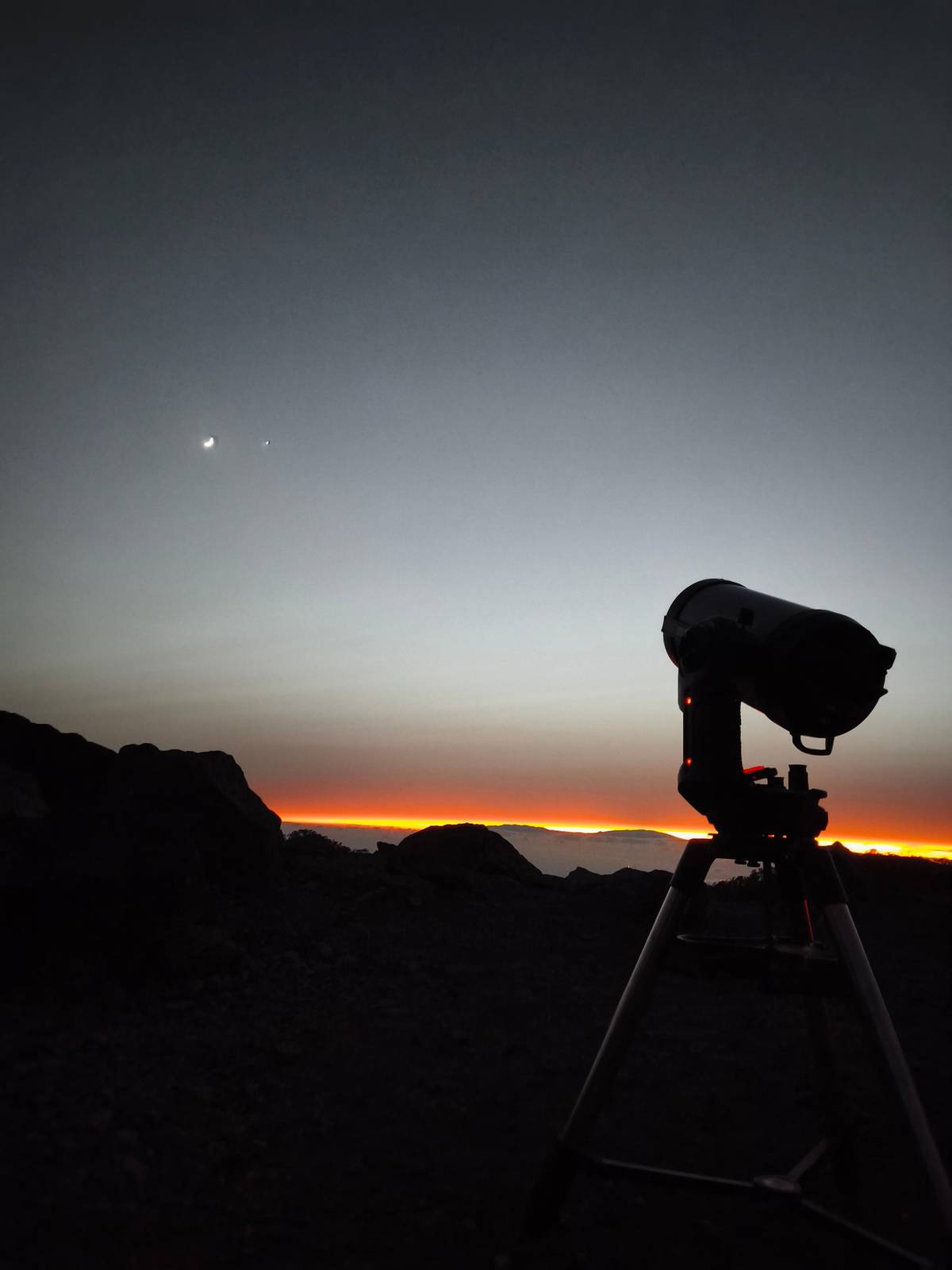
The session booked on this page goes further. It uses professional telescopes for viewing and keeps a second telescope only for astrophotography, capturing objects in real time, and sends you the images after the tour. The large-telescope session includes an astrophotography package, and an astronomy tour from Los Cristianos takes live astrophotographs during the evening.
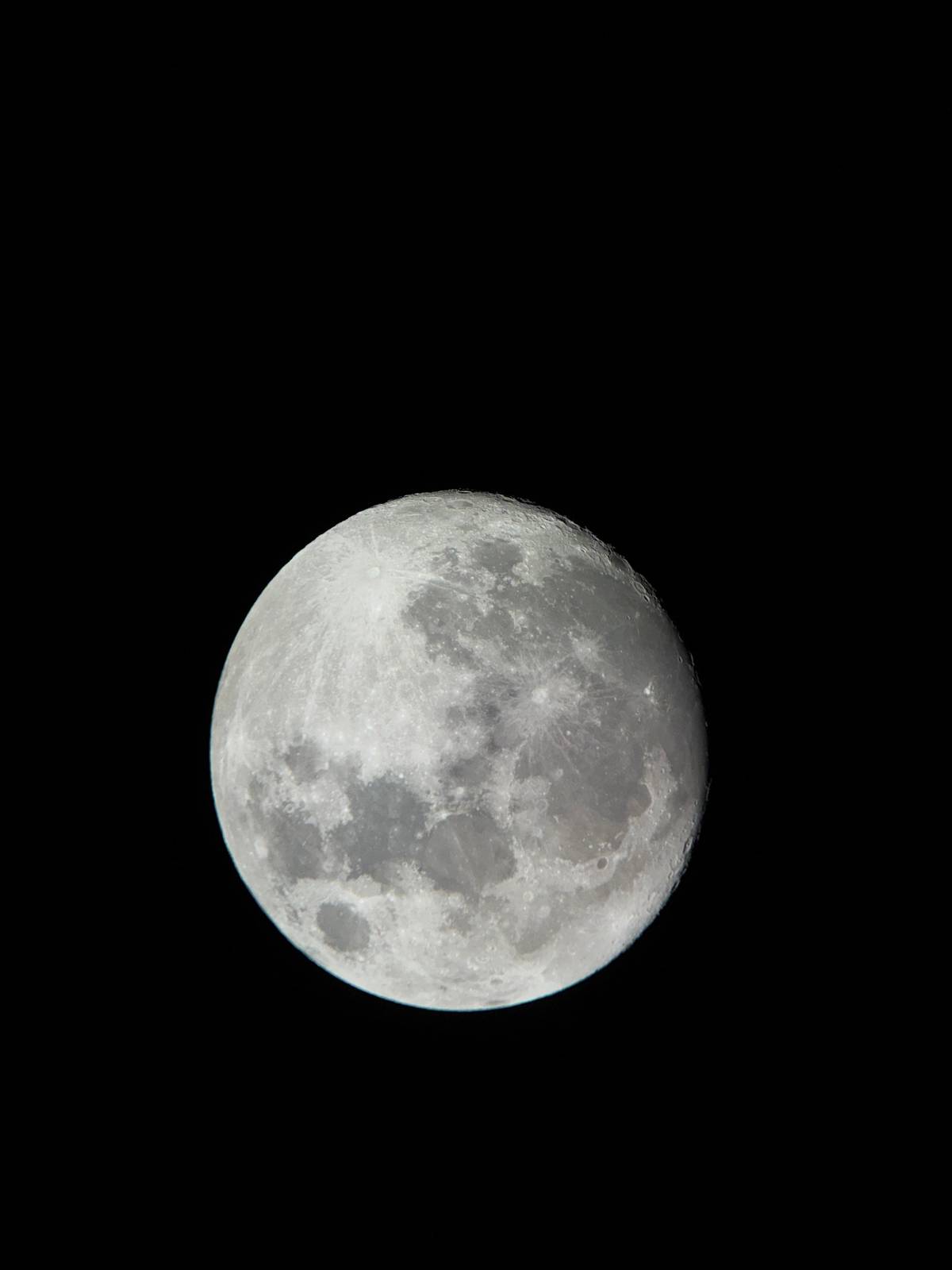
Images taken through a big telescope show detail no phone can reach: the shapes of nebulae, the colors of star clusters, the spiral of a galaxy. They are a different kind of souvenir from a wide Milky Way landscape, and many photographers like to have both, one from the guide and one from their own tripod. If you book a session with astrophotos, ask which objects they usually capture in your month, and whether you can bring your own camera to the telescope for a quick phone shot through the eyepiece as well.
The astrophoto session booked on this page
This session meets in the car park in front of Minas de San José, so you come by your own car. It lasts 80 minutes and starts with a naked-eye tour of the sky, then moves to professional telescopes with a Starlight-certified guide. The guides speak Spanish and English.
It starts from $41 and averages 4.71 from 221 reviews, with 4.7 for the guide and 4.5 for value for money. Payment can wait until later, and cancelling costs nothing until 24 hours ahead of the start. The operator asks guests to keep the Moon's phase in mind when booking.
Dress for the altitude. The operator warns that at 2,000 m night temperatures can drop to 5 °C or below, even in summer, and asks for closed shoes, no sandals. Bring your own camera and tripod too if you like: the meeting point is a car park, so you can arrive early and shoot the twilight before the session begins.
Your night on Teide
Sunset with Cava, then the stars.
Hotel pickup in the south or your own car; choose an evening, and change your mind free until 24 hours ahead.


You ask,we answer.
When can I photograph the Milky Way on Teide?
Best in summer, without a Moon. Summer shows the Milky Way at its fullest; a full Moon washes it out.13
Do I need a permit to photograph in the park?
Only for professional work. Professional photography, film, TV and video need prior authorization.4
Can I fly a drone for night shots?
No. The park lists drones among the aerial activities to avoid, with kites and balloons.5
Where is a good spot for a tripod?
La Ruleta viewpoint. Next to the Roques de García, with plenty of space for equipment.11
Will a tour take a photo of me under the stars?
Several do. The homepage evening includes a guest photo; the session booked here sends astrophotos.
How long should I let my eyes adjust?
15 to 30 minutes. A bright light such as a torch resets it, and you wait another 15 minutes.13
Where does the astrophoto session meet?
At Minas de San José. In the car park in front of Minas de San José; you come by car.
Sources
Sources and evidence
- 1Turismo de Tenerife (webtenerife.co.uk, official tourism site)Stargazing in Tenerife: magical and unforgettable nights↩
- 2AEMET (Spanish State Meteorological Agency)Standard climate values: Izaña (C430E), 1981-2010↩
- 3NASA ScienceMoon Phases↩
- 4Parque Nacional del Teide (Gobierno de Canarias)Normas de visita↩
- 5Parque Nacional del Teide (Gobierno de Canarias)Normas de visita↩
- 6Parque Nacional del Teide (Gobierno de Canarias)Ficha técnica↩
- 7Instituto de Astrofísica de Canarias (IAC)Sky protection↩
- 8Ministerio para la Transición Ecológica (Red de Parques Nacionales)Parque Nacional del Teide↩
- 9Turismo de Tenerife (webtenerife.co.uk, official tourism site)Blanket of cloud↩
- 10NASA ScienceMoon Phases↩
- 11Turismo de Tenerife (webtenerife.co.uk, official tourism site)The best places for stargazing in Tenerife↩
- 12Parque Nacional del Teide (Gobierno de Canarias)Normas de visita↩
- 13Turismo de Tenerife (webtenerife.co.uk, official tourism site)Stargazing in Tenerife: Unique views of the sky↩
- 14Turismo de Tenerife (webtenerife.co.uk, official tourism site)Stargazing in Tenerife: Unique views of the sky↩
- 15NASA ScienceMoon Phases↩
- 16NASA ScienceMoon Phases↩
- 17AEMET (Spanish State Meteorological Agency)Standard climate values: Izaña (C430E), 1981-2010↩
- 18AEMET (Spanish State Meteorological Agency)Standard climate values: Izaña (C430E), 1981-2010↩
- 19Turismo de Tenerife (webtenerife.co.uk, official tourism site)The best places for stargazing in Tenerife↩
- 20Turismo de Tenerife (webtenerife.co.uk, official tourism site)The best places for stargazing in Tenerife↩
- 21Parque Nacional del Teide (Gobierno de Canarias)Normas de visita↩